
Laser Hair Reduction
Your routine.
Your preferences.
Explore laser hair reduction at your own pace. Your clinician will consider your skin, hair and treatment area, and explain the practical details before you decide.
Start with a conversation.
Start with you.
Tell us what matters to you. Your health history, preferences and questions are the starting point for your consultation.
Consider the details.
Your clinician will explain the proposed approach, its evidence, risks and alternatives. Ask about the costs and what is included before deciding.
Plan the next step.
Discuss any preparation, aftercare and follow-up your plan may involve. There is time to ask questions and consider your options.
Treatment considerations.
Some individuals may experience temporary redness, mild swelling, or slight skin sensitivity, which usually resolves within a few hours to days.
Your questions, considered.
Who may consider laser hair removal?
Individuals looking for a non-invasive method to reduce unwanted hair may consider this treatment. A consultation is required to assess suitability.
How should I prepare for the treatment?
Avoid waxing, plucking, and excessive sun exposure before treatment. Shaving the area 24 hours before the session is typically recommended.
Does laser hair removal work on all skin types?
Suitability depends on the specific device, skin, hair and treatment area. Your clinician will assess these factors and explain the relevant risks.
When may I see results?
Response and timing vary. Discuss the expected course, follow-up and whether maintenance may be needed.
Are there any side effects?
Some individuals may experience temporary redness, mild swelling, or slight skin sensitivity, which usually resolves within a few hours to days.
How long do results last?
Duration and maintenance needs vary. Ask your clinician what expectations are reasonable for your skin, hair and treatment plan.
This page provides general information, not individual medical advice. Your clinician will discuss the proposed treatment, relevant risks and alternatives in the context of your health history.
IVY supports your inner & outer wellness
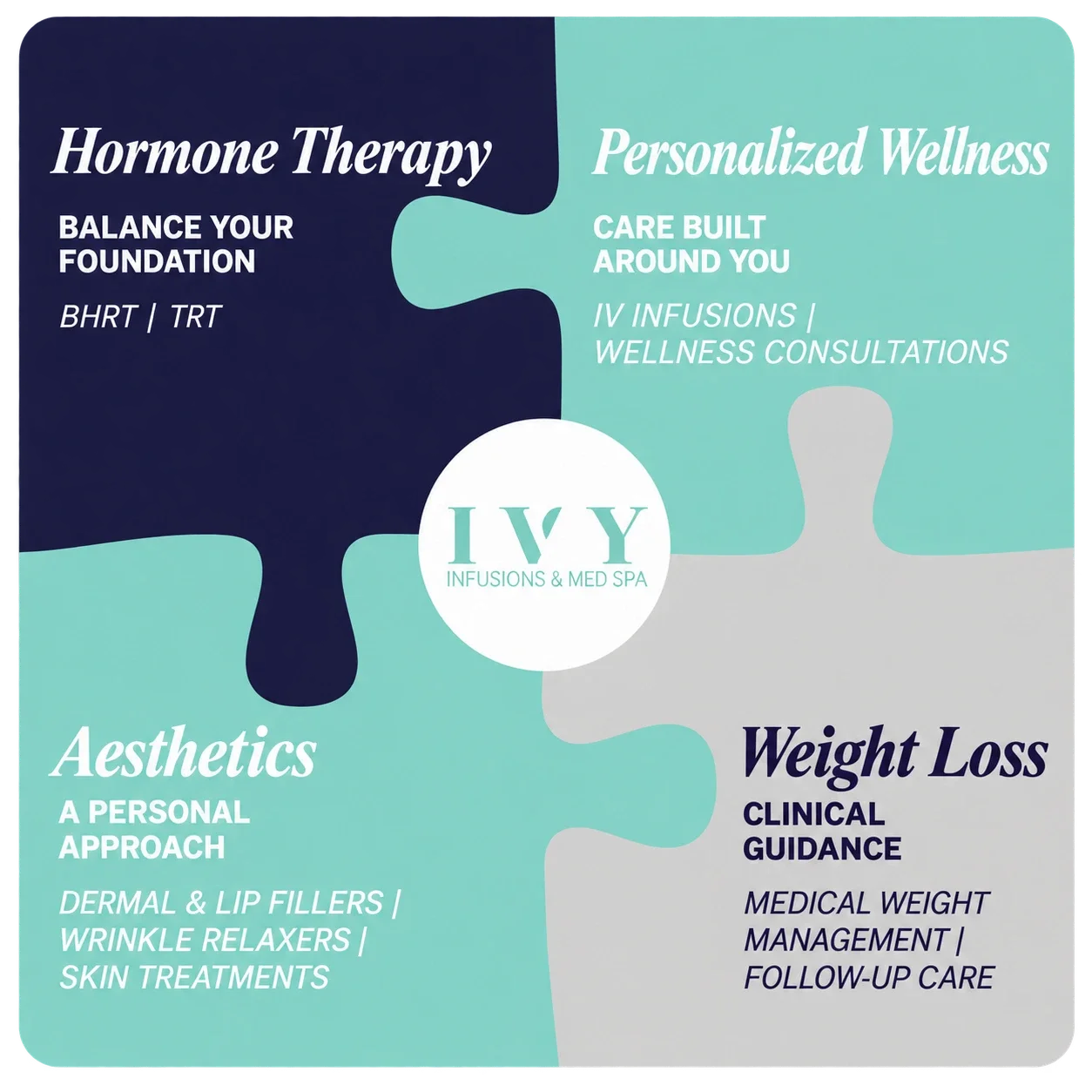
Build your care from the inside out. At IVY, hormone health, metabolic care, infusions and aesthetics are considered together, with your goals at the center.
Your plan can be layered over time. Each treatment has a purpose of its own, and your clinician considers how the pieces fit—what to begin with, what to add and what may not be right for you.
Protocolized care gives that personal plan its structure: assessment, thoughtful treatment planning and follow-up. Start with what matters to you, and build from there.
Meet Sasha Beatty and the IVY team at our Greenwich practice.
Start a conversation