
Regenerative Therapies
A thoughtful look
at your options.
PRP is prepared from your own blood. Manufactured biostimulators are different: Sculptra contains poly-L-lactic acid, not your plasma. Explore the proposed treatment, its evidence, risks and alternatives with your clinician.
Start with a conversation.
Understand the difference.
PRP begins with a blood draw and preparation of your own plasma. Manufactured injectable products differ in ingredients and approval status. Your clinician explains the exact treatment being considered, including any off-label use.
A plan for your treatment.
The proposed product, treatment area and your health history guide the discussion. Ask what the procedure involves, what the evidence supports, and which alternatives—including no treatment—may fit your goals.
Prepare for what follows.
Cost and the number of appointments vary with the treatment and plan. Discuss a written estimate, preparation, aftercare and follow-up before deciding. Do not change prescribed medicines without advice from the clinician who manages them.
Treatment considerations.
PRP is prepared from your own blood. Biostimulators such as Sculptra are different: Sculptra contains manufactured poly-L-lactic acid, not your plasma. Neither treatment is risk-free. Risks include pain, bruising, swelling, infection, and, with Sculptra, lumps or nodules; injectable fillers also carry a risk of serious injury if injected into a blood vessel. Your provider will discuss risks specific to the product, treatment area, and your health history.
Your questions, considered.
Are PRP and Biostimulators safe?
PRP is prepared from your own blood. Biostimulators such as Sculptra are different: Sculptra contains manufactured poly-L-lactic acid, not your plasma. Neither treatment is risk-free. Risks include pain, bruising, swelling, infection, and, with Sculptra, lumps or nodules; injectable fillers also carry a risk of serious injury if injected into a blood vessel. Your provider will discuss risks specific to the product, treatment area, and your health history.
How long do results last?
Response and duration depend on the actual product, proposed use and individual. PRP and manufactured biostimulators are different treatments; ask what evidence applies to your plan.
What areas can be treated?
Treatment areas depend on the exact product and proposed use. Your clinician will explain whether that use is approved or off-label, along with risks and alternatives.
Who is not a candidate for biostimulators?
Biostimulators are not suitable for individuals who are pregnant, breastfeeding, have active infections or have certain medical conditions such as bleeding disorders or undergoing anticoagulant therapy.
How many sessions are needed?
There is no single schedule for all treatments. Your clinician will explain the rationale, evidence, costs and follow-up for any proposed course.
This page provides general information, not individual medical advice. Your clinician will discuss the proposed treatment, relevant risks and alternatives in the context of your health history.
IVY supports your inner & outer wellness
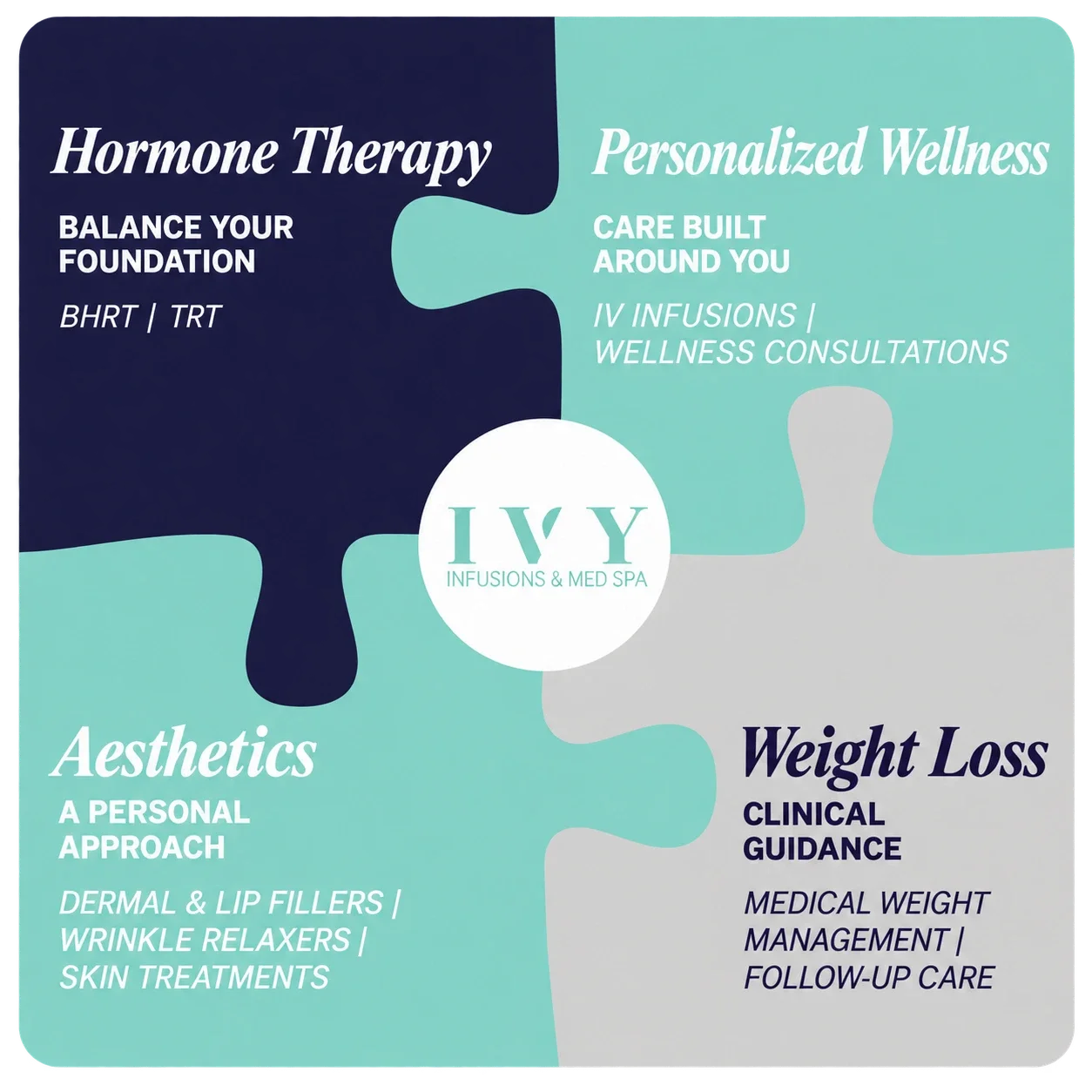
Build your care from the inside out. At IVY, hormone health, metabolic care, infusions and aesthetics are considered together, with your goals at the center.
Your plan can be layered over time. Each treatment has a purpose of its own, and your clinician considers how the pieces fit—what to begin with, what to add and what may not be right for you.
Protocolized care gives that personal plan its structure: assessment, thoughtful treatment planning and follow-up. Start with what matters to you, and build from there.
Meet Sasha Beatty and the IVY team at our Greenwich practice.
Start a conversation